
Welcome to Learning about G11 Epoxy Fiberglass Tube
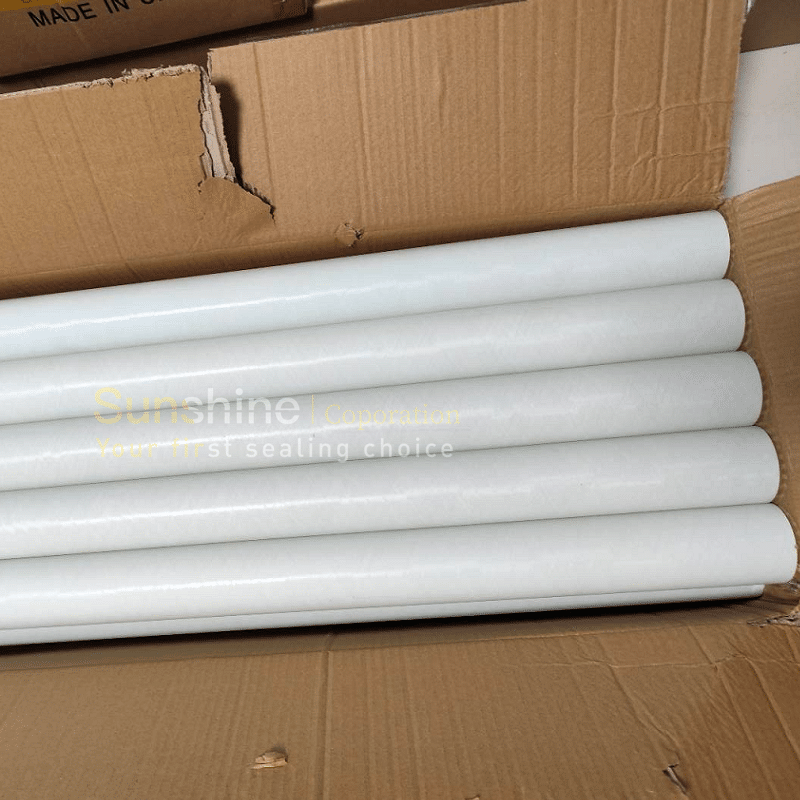
The G11 epoxy fiberglass tube has exceptional mechanical and insulative strength across a range of conditions. Compared to G10, it has better insulating and thermal resistance qualities. Its natural colour varies from amber to yellow-green, and it is a filament-wound tube.
G11 glass epoxy comes in two different classifications. Class H applications are designed to operate at temperatures as high as 180°C. Applications with temperatures as high as 150°C are intended for Class F.
G11 is a glass epoxy laminate that has some properties in common with G10. Its most notable property is its ability to withstand very high temperatures.

The Difference between G11 and FR5
Similar to G10/FR4, G-11/FR5 offers better mechanical qualities at high temperatures and a greater working temperature. The main difference between NEMA grades G11 and FR5 is that FR5 is a fire retardant grade of G11.
G11 vs G10
Glass epoxy comes in two varieties: G11 and G10. They share several characteristics and differ in a few significant ways. Glass epoxy G11 operates at a greater temperature than G10. In comparison to G10, G11 exhibits superior mechanical characteristics at elevated temperatures. Most people agree that it is a superior insulator than G10.
Benefits of G11
As a high-performance material, the G11 epoxy fiberglass tube has several advantages. It can tolerate temperatures up to 150°C and is suitable for usage in both wet and dry environments.
- Low moisture absorption
- Cryogenic serviceability
- High dielectric strength
- High flexural strength
- High impact strength
- High tensile strength
- Low dissipation factor
- Dimensional stability
- Radiation resistance
- Chemical resistance
- Low cold flow
Applications
G11 epoxy fiberglass tubes are used in numerous industries, such as bolt protection, chemicals, the military, medicine, and electrical. It can provide stable and reliable material solutions for these fields.
Typical Properties of Filament G11
| Properties | Test Methods | Unit | Value |
|---|---|---|---|
| Density | ASTM D792 | g/cm³ | 1.82 |
| Water Absorption, 24 hrs | ASTM D570 | % | 0.2 |
| Tensile Strength | ASTM D638 | psi | 37000 |
| Compressive Strength | ASTM D695 | psi | 63000 |
| Flexural Modulus | ASTM D790 | ksi | 4200 |
| Hardness | ASTM D785 | Rockwell | 112 |
| Coefficient of Linear Thermal Expansion | ASTM D696 | x 10-5 in./in./°F | 1.1 |
| Max Operating Temp | °C | 150 |